Do Racetracks Need Spectator Liability Insurance?
Short answer: yes, and it's one of the most commonly underinsured pieces of a track's program — not because owners think it's optional, but because they assume their general facility policy already handles it, or that a state law they've heard about already protects them. Neither assumption holds up once you look closely, and both are worth clearing up before your next race day, not after an incident.
Why a standing facility policy isn't enough on race day
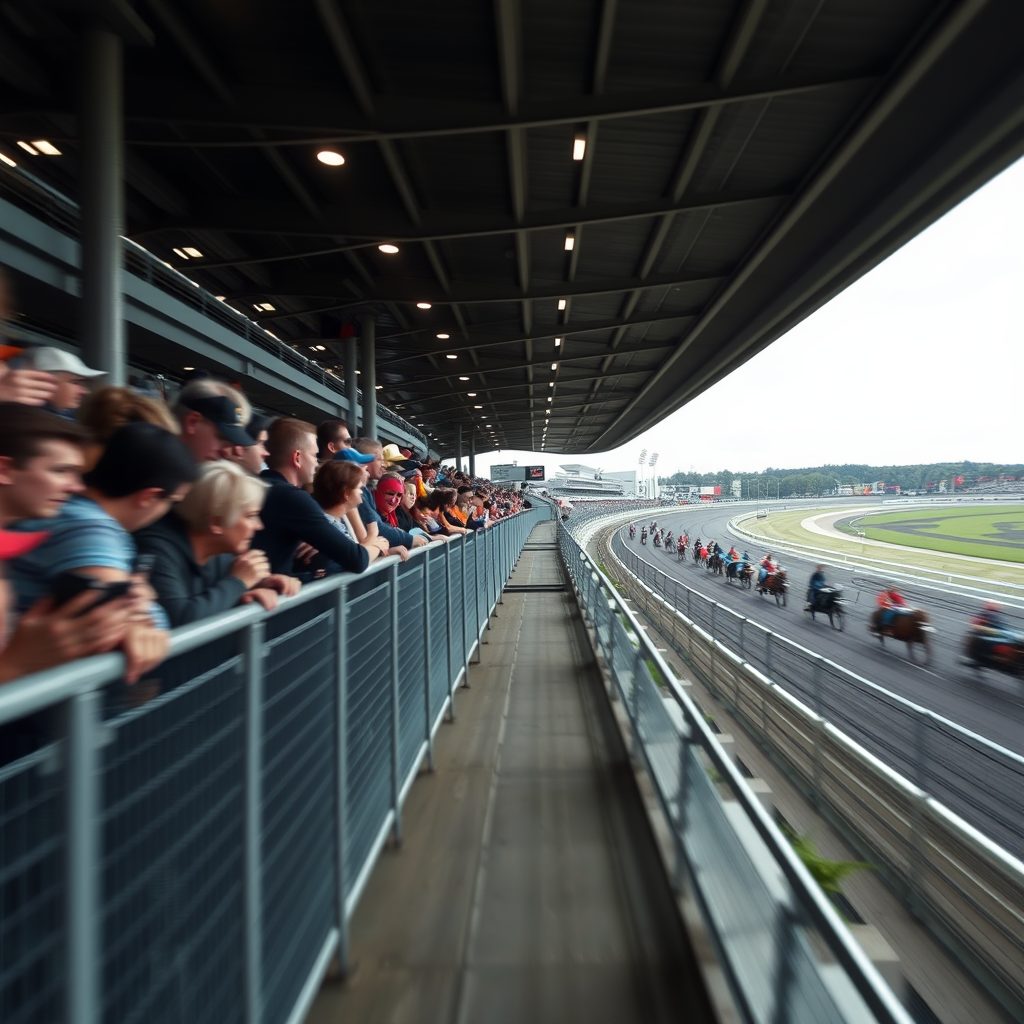
General facility liability protects a venue's day-to-day operations — the baseline exposure of owning a piece of property with buildings and grounds. But it isn't sized for the concentrated exposure of an actual race card: thousands of people moving through gates, grandstands, and betting windows in a short window, often with alcohol in the mix, standing close to a live racing surface. That's a fundamentally different risk profile than a quiet Tuesday morning training session, and it needs its own coverage layer to be underwritten properly.
What spectator & event liability actually covers
- Bodily injury to spectators and attendees during a race event
- Grandstand, rail-area, and walking-ring incident liability
- Liquor liability where alcohol is served
- Vendor and concession-related liability
- Liability arising from wagering-area crowds
Do state equine activity statutes already protect us from spectator claims?
This is a genuinely important question, and it's one we hear more often than you'd expect from venue operators who've read enough to be dangerous — meaning they know their state has some kind of equine activity liability law, but not exactly what it does. Most states have adopted a version of this law, and they're real, meaningful protection in the right context. But that context is narrower than a lot of operators assume.
Equine activity statutes were written to limit liability for the inherent risks of participating in an equine activity — the unpredictable ways a live animal can behave, even when everyone involved is doing everything right. They're built to protect the people directly engaged in the activity: a stable letting someone ride a lesson horse, an event where participants sign a waiver acknowledging the risks of being around horses. That is a very different legal posture than a paying spectator sitting in a grandstand, walking past a betting window, or standing at the rail during a race — someone who isn't participating in the equine activity at all, just watching it, and who in most cases hasn't signed anything acknowledging inherent risk.
More importantly, these statutes typically carve out an exception for ordinary negligence — poor property maintenance, inadequate crowd control, a known hazard that wasn't addressed, understaffed security during a known high-attendance event. A claim that traces back to negligence on the venue's part generally isn't the kind of claim an equine activity statute was built to shield.
Your state's equine activity statute may genuinely help in some scenarios involving direct participants, but it was never designed to be a substitute for spectator liability coverage — and treating it as one is exactly the kind of assumption that surfaces, expensively, after an incident rather than before.
This is a topic most insurance pages don't touch at all, which is exactly why we think it's worth answering plainly rather than leaving it to a law firm's blog post to explain.
One-day event liability: coverage for a single race card
Not every race day happens at a standing, year-round track, and not every operator needs — or should buy — a full annual liability program. If you're organizing a single fairground meet, a one-time charity fundraiser race, or a community event with a live racing component, a one-day event liability policy is built for exactly that situation: coverage scoped to a single date, sized to your expected attendance and activities, and issued fast enough to satisfy a fairground or municipality that requires proof of insurance before they'll approve the event.
This is worth calling out specifically because "one-day event liability" is a real, widely searched insurance category — people organizing all kinds of one-time events look for it constantly — and a race day is precisely the kind of single-date gathering it was built to cover. If you've been assuming your only options are "buy a full annual policy" or "go without coverage for a one-off event," neither is true. A properly scoped one-day policy closes that gap without overpaying for a year of coverage you don't need.
Organizing a one-time race day? Call 844-967-5247 and we'll issue the certificate your fairground or municipality requires before they'll approve the event.
The liquor liability gap
Most race days involve alcohol somewhere on the grounds — a licensed concession, a clubhouse bar, a hospitality tent. Liquor liability is frequently excluded or sub-limited on a standard general liability form, which means a claim arising from an intoxicated patron can fall straight through the coverage gap unless it's explicitly addressed as its own endorsement. This applies regardless of scale: a full bar and a beer-and-wine concession carry the same basic exposure, because liquor liability responds to what happens after alcohol is served, not to how elaborate the setup was. If alcohol is served anywhere on your grounds — even a single tent, even for one afternoon — it's worth confirming explicitly that your policy addresses it, rather than assuming a general liability form has you covered by default.
Sizing liability to actual attendance
One of the most common mistakes tracks make is setting a flat annual liability limit and never revisiting it against actual event size. A weekday training morning and a stakes-race Saturday with ten thousand people in the grandstand are not the same exposure, and a limit that comfortably covers the former can be genuinely inadequate for the latter. Sizing liability to your real event calendar — not a rough annual average — is the difference between a policy that looks fine on paper and one that actually protects you on your biggest day of the year.
Vendors, concessions, and third-party exposure
Food trucks, merchandise vendors, and third-party concessionaires add another layer of exposure that's easy to overlook until an incident traces back to a table your venue didn't directly operate. Requiring — and actually verifying — a certificate of insurance from every vendor operating on your grounds is a simple, low-cost habit that keeps a third party's incident from becoming the track's uninsured problem. We help venues build that verification into their event checklist rather than treating it as an afterthought.
What happens after an incident
A fast, documented response matters as much as the coverage itself. Incident reports, photos, and witness contact information gathered in the moments after a grandstand fall or a rail-area incident make the eventual claim significantly easier to resolve fairly and quickly — waiting days to document what happened almost always works against the venue, regardless of how good the underlying policy is.
Building event liability into your planning, not bolting it on
The tracks and organizers who handle this best treat event liability as part of planning a race day from the start, not a certificate they scramble for the week before. That means knowing your expected attendance, your alcohol-service plan, and your vendor roster early enough to get accurate coverage in place — rather than guessing at a policy based on last year's numbers and hoping this year doesn't outgrow it. It also means being clear-eyed about which of these situations actually applies to you: a standing annual program for a track that races every week, or a one-day event policy for a single meet, rather than defaulting to whichever one you've heard of.
A quick planning call before the season starts, rather than before each individual event, is usually all it takes to keep coverage aligned with an entire race-day calendar instead of chasing it event by event — and it means the certificate a fairground or municipality asks for is ready well before anyone has to ask twice. If your situation is a single race day rather than a standing season, that same call is just as quick: tell us the date, the expected crowd, and whether alcohol will be served, and we'll get you a one-day policy and the certificate that goes with it. Call 844-967-5247.
Frequently asked questions
Often yes, layered on top of standing facility coverage — or it can be written standalone for a specific event. We'll structure it around your actual race-day calendar.
Liquor liability applies to any alcohol service, not just full-bar operations. If alcohol is served anywhere on your grounds, it needs to be explicitly addressed.
Generally no. Those statutes were written to limit liability for the inherent risks of participating in an equine activity, not to protect a venue from a paying spectator's claim, and they typically carve out an exception for ordinary negligence like poor maintenance or inadequate crowd control. Spectator liability coverage is still needed.
Ready for a real quote?
Tell us which side of race day you're insuring and we'll build a program that fits — often same day.