Racer Insurance for Jockeys, Drivers & Racing Participants
Accident, disability, and participant liability coverage — including Care, Custody & Control — for the jockeys, drivers, and riders who take racing's real physical risk.
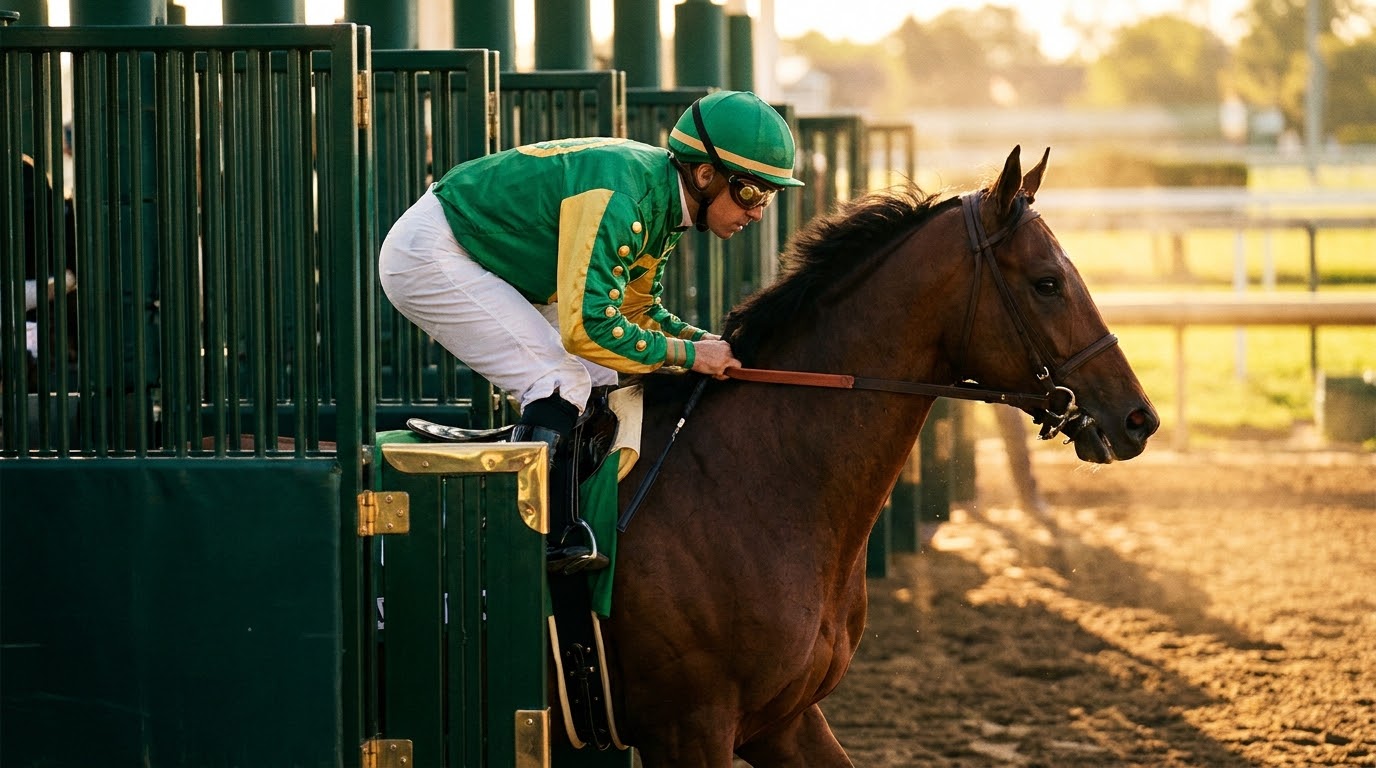
“Nobody in the entire sport carries more physical risk than the person on the horse or in the sulky. This is sports accident insurance and sports participant accident insurance in its most concentrated form: racing at speed, in close company with other competitors, on a surface that can shift with the weather, is inherently dangerous — and unlike most workplace risk, it can't be engineered away. Racer insurance exists to protect the participants themselves: the jockeys, drivers, exercise riders, and other licensed racing participants who take that risk every time they compete.
This coverage is built around the participant, not the animal or the venue. It typically combines accident and disability coverage for injuries sustained while racing, training, or exercising, with participant liability coverage addressing claims that can arise from a racing incident involving another competitor. And because jockeys and grooms routinely handle horses that belong to someone else — a trainer's string, a claimed horse, a mount picked up for a single race — a real racer program also has to address the liability exposure that comes from having physical control of an animal you don't own.
If you've searched “jockey insurance” and come back with either nothing useful or results for valet parking, that's a real and documented gap in how this coverage shows up online, not a sign that it doesn't exist. This page covers what it actually includes, in plain terms.
- Accidental injury sustained while racing or training
- Temporary and permanent disability from a covered racing injury
- Accidental death benefit
- Participant liability arising from an on-track incident
- Coverage while exercising or schooling, not just race day
- Medical expense reimbursement for covered injuries
Accident & Disability Coverage for Jockeys and Drivers
Jockeys and drivers are frequently independent contractors rather than employees of a single stable, which means standard workers' compensation coverage — built around an employer-employee relationship — often doesn't fit cleanly, or doesn't reach the rider at all. Racer insurance is designed for that reality: coverage that follows the participant across mounts, trainers, and tracks, rather than being tied to a single employer who may or may not carry coverage that actually protects the rider.
Buyers in this space expect real numbers, not vague reassurance. High-limit accident programs built for racing participants are commonly structured with a headline limit — often in the range of $1 million — with options to increase for participants who want higher protection, because the injury risk in racing is both frequent and potentially severe: falls, being thrown, contact with other horses at speed.
Disability coverage addresses the part accident coverage alone doesn't: what happens to a jockey's or driver's income if a serious injury means weeks, months, or a career's worth of time away from riding. Both temporary and permanent disability benefits can be structured to reflect how a participant actually earns — mount fees, purse percentages, and driving fees rather than a fixed salary.
- High-limit accident coverage — commonly structured around $1 million, with options to increase
- Disability coverage — replaces lost mount fees, purse percentages, or driving fees during recovery
- Coverage follows the participant across mounts, trainers, and tracks
Care, Custody & Control: Coverage When You're Handling a Horse You Don't Own
This is one of the most overlooked coverage gaps in the entire sport, and it applies directly to jockeys, exercise riders, and grooms: the moment you're physically handling, riding, or exercising a horse you don't own, you have a care, custody, and control (CCC) exposure — and general participant liability coverage doesn't automatically address it.
CCC coverage is the endorsement that addresses that specific gap. It's a standard, recognized coverage term in the equine insurance industry, and it's worth asking directly whether your current racer or participant coverage includes it. This coverage works alongside the horse's own mortality and medical policy (see our Equine Insurance page) rather than duplicating it — the owner's mortality coverage protects the horse's value, and your CCC coverage protects you as the person who had the horse in hand.
- A jockey riding a horse owned by someone else in every race
- An exercise rider galloping a trainer's client horses each morning
- A groom handling horses belonging to the barn's ownership group
Am I Liable If My Horse Kicks Someone?
This is a real question people ask, and it deserves a direct answer: potentially, yes — and “my horse” in a racing context often means a horse you're riding, exercising, or handling rather than one you own outright, which makes the liability picture more layered than it looks at first.
Generally speaking, if a horse under your control injures a bystander, another participant, or another horse, liability exposure can attach to the person who had control of the animal at the time, not exclusively the owner. State equine activity statutes provide some protection in many jurisdictions against claims arising from the inherent risks of being around horses, but that protection is narrower than most people assume and typically doesn't shield a handler from a claim involving ordinary negligence. This is exactly the kind of exposure participant liability coverage exists to address.
Trainer & Riding Instructor Liability
Racer insurance, as scoped on this page, is built around licensed racing participants — jockeys, drivers, exercise riders, and gallop crews. Trainers and riding instructors sit in an adjacent but distinct position: they're directing the activity and making the care decisions for horses in their charge, which creates its own liability profile separate from a rider's participant coverage. If you're a trainer overseeing a string of horses, or a riding instructor teaching in a racing or training environment, your primary exposure often runs closer to a professional and premises liability question rather than the accident/disability question a mounted participant faces every time they compete.
What Drives the Cost of Racer Insurance
There's no flat jockey-insurance-costs-X answer, because the factors that actually drive premium here are specific to how, how often, and under what conditions someone is actually racing.
Discipline matters first — flat racing, harness/sulky driving, and exercise-only riding each carry a different injury profile. Mount volume is a direct driver, since the number of races or training sessions per year is essentially an exposure count. The coverage limits you select move cost proportionally. Prior injury history factors into both eligibility and rate. License type changes the picture too — an apprentice jockey, a journeyman, a harness driver, and an exercise rider are all different underwriting profiles. And whether you already have some baseline coverage through a track or racing association affects what you actually need to buy versus what's duplicative.
Who needs this coverage
- Licensed jockeys, apprentice and journeyman
- Harness racing drivers
- Exercise riders and gallop crews
- Racing participants without employer-provided coverage
- Independent contractor riders working across multiple stables
- Racing associations wanting to offer participant coverage
What drives your cost
Quote racer insurance
A few details is all we need to start. A specialist will build a program specific to racer insurance — no generic one-size quote.
Prefer to talk?844-967-5247Racer Insurance questions, answered
This is exactly the gap racer insurance is built for. As an independent contractor, you're often not covered by any single stable's workers' comp. Racer insurance follows you across mounts and trainers rather than being tied to one employer.
Yes — a real participant policy extends to training and exercise, since that's where a large share of racing injuries actually happen, not only on race day itself.
It replaces a portion of lost racing income — mount fees, purse percentages, or driving fees — while a participant recovers from a covered injury, and can include a permanent disability benefit for career-ending injuries. Structuring the benefit around how racing participants actually earn is the difference between a policy that works on paper and one that pays out realistically.
CCC coverage addresses your liability for a horse you're riding or handling but don't own — a routine situation for nearly every jockey, exercise rider, and groom. General participant liability doesn't automatically extend to a horse's injury while it's in your care, which is exactly the gap CCC coverage closes.
Potentially, yes — liability for an incident involving a horse you're riding, exercising, or handling can attach to you as the handler, not only to the owner. State equine activity statutes offer some protection but typically don't cover ordinary negligence. Participant liability coverage is built to address this exposure directly.
Generally yes — a trainer's or instructor's exposure runs closer to professional and care-custody-control liability for the horses in their charge, rather than the personal accident and disability coverage a mounted competitor needs. Call 844-967-5247 and we'll help sort out which structure actually fits your role.
Yes — we work with racing associations and tracks that want to offer baseline participant accident coverage as part of licensing. Call 844-967-5247 to talk through a group structure.
Related coverages


Placing racer insurance through a racing specialist
Racer Insurance rarely sits in isolation — it works alongside the rest of your racing program, and getting the coordination right is where a specialist matters. As a Contractors Choice Agency program focused entirely on racing, we structure your racer insurance so it lines up cleanly with any other coverage line you carry — no overlapping premium you pay twice for, and no gap where a loss could fall between policies.
We shop your risk to A-rated carriers that genuinely understand racing, present your operation in the best possible light to earn better pricing, and stay in your corner at renewal and at claim time. Whether you're insuring a single horse or a full facility, in any of the 50 states, we'll right-size this coverage to how you actually operate rather than handing you a generic quote.
Tell us the details
A few specifics on your side of race day — by form or a quick call.
We build the program
We structure racer insurance and any other lines you need with the right carriers.
Bind and get certs
Review, bind, and receive the certificates a venue, sanctioning body, or lender requires.
Ready to quote racer insurance?
Tell us which side of race day you're insuring and we'll build a program that fits — often with same-day turnaround.