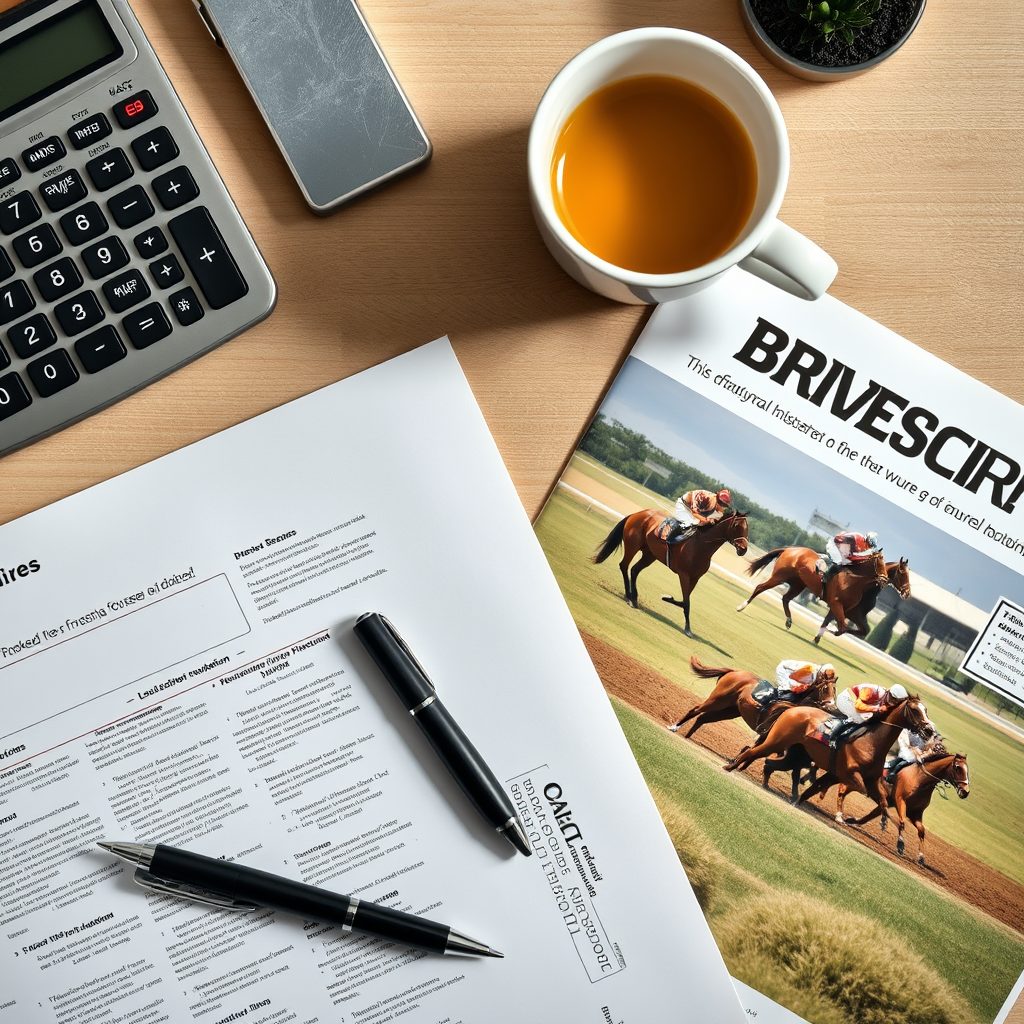
Equine Mortality Insurance Explained

Every owner who's spent real money on a racehorse eventually asks the same question: what actually happens if something goes wrong? Mortality insurance is the answer, and it's simpler than it sounds — but the details matter more than most owners realize until they're filing a claim. It's also just one piece of a bigger picture: mortality, major medical, loss of use, and a related-but-separate liability product all answer different questions, and confusing them is where most owners get surprised.
The core idea: agreed value
You and the insurer agree on a value for the horse up front. If the horse dies from accident, illness, or disease — or must be humanely destroyed on veterinary advice under covered circumstances — the policy pays that agreed value. It's not a market appraisal negotiated after the fact; it's set going in, which is exactly why keeping it current matters.
Value is typically tied to purchase price, the most recent claiming price, or a documented appraisal reflecting recent form and earnings. In claiming races specifically, a horse's price can change the moment the claiming box closes — a policy that isn't updated to reflect a claim can leave an owner over- or under-insured almost overnight.
Mortality vs. major medical vs. loss of use — three different questions
This is where the confusion usually starts, and it's worth separating clearly before anything else. Mortality insurance answers exactly one question: did the horse die, or did it need to be humanely destroyed under covered veterinary circumstances? If yes, it pays the agreed value. It does not pay a veterinary bill for a horse that gets sick or hurt and survives — that's a completely different coverage, major medical and surgical insurance, which reimburses treatment costs for covered accidents and illness. And it does not respond at all if a horse survives an injury but can never race or breed again — that outcome is what loss-of-use coverage exists for, and a straight mortality policy leaves it entirely uncovered.
Mortality pays if the horse dies. Major medical pays the vet bill if the horse gets treated and lives. Loss of use pays if the horse lives but its racing or breeding career is permanently over. Three different triggers, three different coverages.
Owners who assume one of these three automatically covers the others are the ones who discover the gap mid-claim rather than before it.
Colic surgery is the clearest real-world example of why this distinction matters. Colic is one of the most common serious emergencies in racing stock, and it can go one of two ways insurance-wise. If the horse doesn't survive, that's a mortality claim — the agreed value is paid out, subject to the veterinary determination tying the death to a covered cause. If the horse survives, the cost of the surgery itself — which commonly runs well into five figures — is a major medical claim, not a mortality claim, because the horse is alive. Two different outcomes of the exact same emergency, two entirely different coverages responding. An owner who only carries mortality and assumes it "covers colic" generically can be in for an unpleasant surprise the moment the horse actually pulls through.
Loss of use — the coverage owners think about too late
A horse can survive a serious injury and never race or breed again. That outcome — permanent, career-ending, but not fatal — is exactly what loss-of-use coverage addresses, and it's the gap a straight mortality policy leaves wide open. For any horse whose value is tied directly to racing earnings or future breeding prospects, that gap is not a small one. Loss-of-use claims tend to move slower than mortality claims for a practical reason: the insurer has to establish that the inability to perform is genuinely permanent, not a temporary setback the horse might recover from with time and rehabilitation. That documentation burden is exactly why it's worth discussing loss-of-use coverage before you need it, not after an injury when you're already navigating a slower claims process on top of the setback itself.
How agreed value actually gets set
Underwriters typically look at purchase price for a recently acquired horse, the most recent claiming price for a horse racing in claiming company, or a documented appraisal reflecting current form, earnings, and pedigree for a horse that's been in the same hands for a while. None of these are static — a maiden win, a big allowance score, or a slide down the claiming ladder can all move a horse's real value substantially within a single meet.
That's precisely why owners who race actively should revisit their agreed value at least once a season, and immediately after any result that meaningfully changes what the horse would sell for. A policy that was correctly valued at purchase but never updated after two stakes wins is quietly underinsured — and a policy that was never adjusted downward after a run of poor form can mean paying premium on value that no longer exists.
Age and eligibility — a real underwriting factor, not a formality
Age is one of the first things any mortality underwriter looks at, and it's worth understanding going in rather than being surprised by it later. Across the equine mortality industry broadly, it's standard for full mortality coverage to run through a stated maximum age bracket, with pricing increasing as a horse moves through the older end of that range, and different terms typically applying beyond it. This isn't arbitrary — the actuarial risk of death simply rises with age, the same underwriting logic that applies to any insurance product priced around mortality risk. If you're insuring a young, unraced prospect versus a veteran campaigner with several seasons behind it, expect that difference to show up directly in both the terms offered and the premium. It's a fair question to ask up front: what age brackets and terms apply to the specific horse you're insuring, so there are no surprises when it's time to renew.
Race Horse Owners Liability — a related but distinct concept
Mortality insurance protects your financial interest in the horse. It does not address your personal liability exposure as an owner — a separate, related concept in this industry generally referred to as Race Horse Owners Liability. This matters most for owners who aren't in the barn every day: syndicate members, passive partners, and investors who own a piece of a horse but leave the day-to-day training and handling to a trainer. If something goes wrong while your horse is racing or training — an incident involving another horse, a handler, or a bystander — your ownership interest can carry liability exposure even though you weren't the one holding the lead shank that morning. That's a fundamentally different risk than "did my horse die," and it's worth asking directly how your ownership liability is addressed in your overall program rather than assuming your mortality policy extends to it, because in most cases it doesn't — the two are built to answer different questions.
Theft and transit mortality
Beyond death from accident, illness, or disease, most equine mortality policies also address theft and transit mortality — death occurring while the horse is being hauled to or from the track, a sale, or a training facility. Because transportation is one of the more physically demanding parts of a racehorse's life, this extension matters more than owners who haul infrequently might assume, and it's worth confirming explicitly rather than assuming it's automatically bundled in.
Who should be named on the policy
Ownership structure matters more than owners often expect. A horse owned outright by one person is straightforward, but partnerships, syndicates, and trainer-care arrangements each raise the question of who actually needs to be protected and how. A trainer with a horse in their care, custody, and control typically carries a distinct exposure from the owner's own mortality interest, and syndicate members each have a financial stake that may need to be reflected on the policy individually rather than assumed to be covered by a single owner's name. Getting this structure right at the start avoids a dispute over payout at exactly the worst possible time.
Getting covered quickly after a claim
Claiming-race owners often need coverage bound within days of a claim, not weeks. A specialist program built for racing can move fast here — call 844-967-5247 with the horse's details and we'll get moving right away, with the paperwork built around how claiming actually works rather than a generic new-policy intake process. If you're also weighing whether major medical, loss of use, or an ownership liability conversation makes sense alongside straight mortality, that's exactly the kind of program-level question worth asking in the same call rather than three separate ones later.
Frequently asked questions
It's not a formal licensing requirement to race, but for any horse representing real financial value, it's the standard way owners protect that investment against the physical risk racing inherently carries.
Transit mortality is typically included alongside general mortality coverage — talk to us about how your specific transportation arrangement is structured.
No — mortality protects your financial interest in the horse itself. Personal liability exposure as an owner is a separate, related coverage generally referred to as Race Horse Owners Liability, which matters most for syndicate members and passive partners who aren't in the barn day to day. Ask us how it fits alongside your mortality policy.
Ready for a real quote?
Tell us which side of race day you're insuring and we'll build a program that fits — often same day.