Hauling Horses: What Your Auto Policy Probably Doesn't Cover
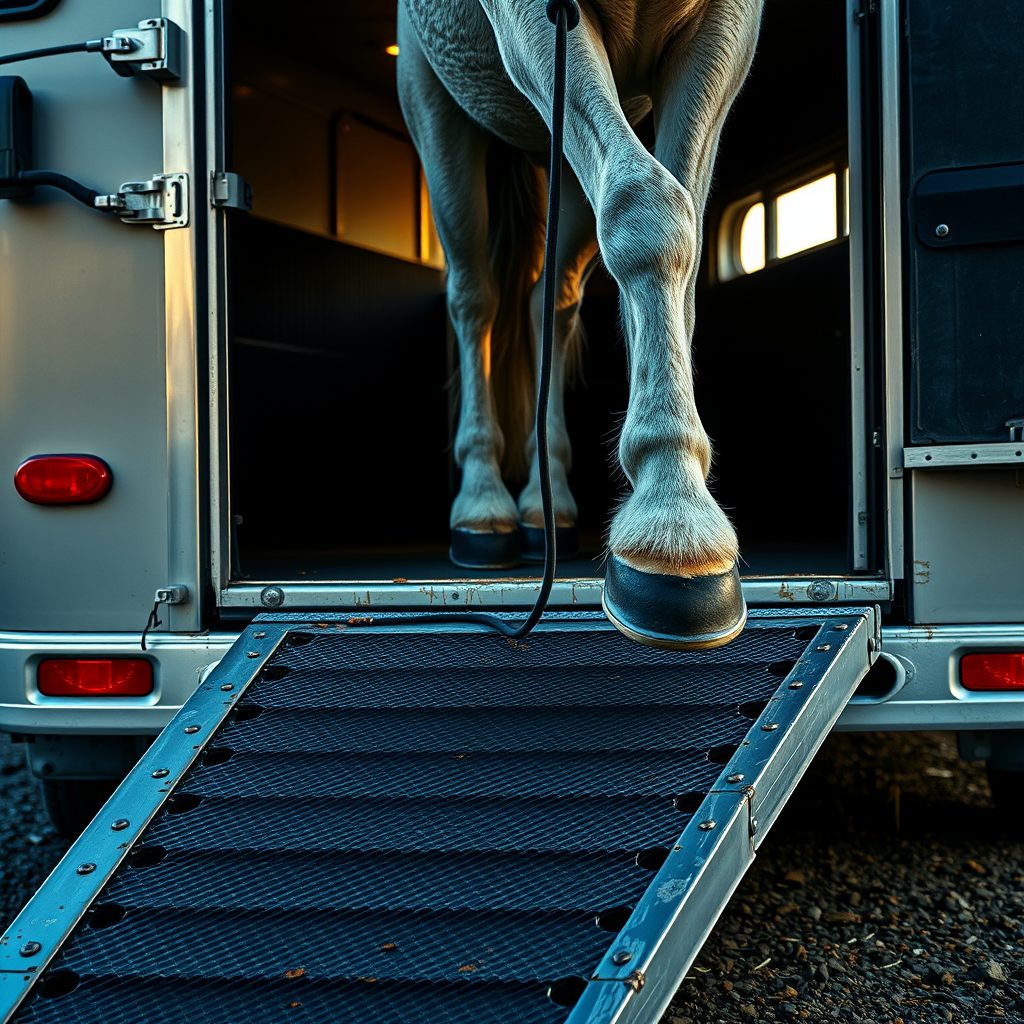
Most owners and trainers who haul their own horses assume their personal auto policy has them covered. It's a reasonable assumption — right up until it isn't, and the worst possible moment to find out is after an incident, not before one. Most of the confusion comes down to one thing: nearly everything that comes up when you search for horse trailer insurance was built for a completely different buyer than a racing operation.
Why personal auto often falls short
Personal auto policies are written with an assumption, explicit or practical, that the vehicle isn't being used for business. Hauling horses to races, sales, or events — especially for any form of compensation — crosses that line quickly. Some personal policies exclude livestock-hauling exposure outright; others simply weren't priced or underwritten with a loaded trailer and a live animal in mind, which can mean thin or disputed coverage exactly when a real claim shows up.
Commercial vs. personal horse trailer insurance — what race teams actually need
This is the distinction that matters most, and it's the one that gets blurred the most often. The vast majority of horse trailer insurance products on the market — the ones a weekend hobbyist finds when they search for it — are built around a personal-use profile: an owner towing their own one or two horses to the occasional local show, on their own schedule, with no compensation changing hands. That's a real and legitimate product, but it's not the product a racing operation needs, and buying it anyway is one of the more common and more expensive mistakes we see.
A racing operation hauling horses to the track on a real schedule looks nothing like that profile. It typically involves hauling more frequently, often across longer distances and multiple states, sometimes with staff and equipment traveling along with the horses, and — critically — often involving some form of compensation, whether that's a training fee, a day rate, or a formal hauling contract. Any one of those factors can push an operation out of personal-use territory and into commercial territory, whether or not it "feels" like a commercial trucking business day to day. Commercial horse trailer insurance is underwritten for exactly that reality: for-hire hauling, business use of the tow vehicle, and liability limits sized to an actual operation rather than a hobbyist's occasional trip. If your hauling looks anything like the racing-operation description above, that's the product you need to be asking for by name — not the generic "horse trailer insurance" that dominates most search results and most personal-line quote forms.
What transportation & auto insurance actually adds
- Liability for the tow vehicle written for commercial and for-hire hauling, not just personal use
- Physical damage coverage for both the tow vehicle and the trailer
- Care, custody, and control coverage addressing the horse in transit, not just the vehicle
- Coverage that scales from a single truck-and-trailer up to a multi-state hauling fleet
The horse itself is a separate question
A horse in a trailer is, for the duration of the trip, in the hauler's care, custody, and control — a distinct exposure from the vehicle liability itself. If a horse is injured during transit due to an accident or a trailer incident, care-custody-control coverage addresses that specifically, working alongside the horse's own mortality and medical coverage. This is especially important for commercial haulers moving horses that belong to someone else, where the hauler's liability for another owner's horse in transit is a real, insurable exposure that a standard commercial auto policy doesn't automatically pick up.
It's also worth knowing that Care, Custody & Control isn't limited to hauling — it follows any situation where you're physically responsible for a horse you don't own, including in a barn, a paddock, or a training ring. But the exposure is at its sharpest in transit, because a moving vehicle adds a layer of risk that simply isn't present when a horse is standing in a stall, and it's the scenario where owners most often assume — incorrectly — that "the truck's insurance" and "the horse's insurance" automatically talk to each other.
"The truck's insurance" and "the horse's insurance" don't automatically talk to each other — unless the policy is built to make sure they do.
Occasional hauling still counts
You don't need to run a full commercial operation for this to apply. Hauling a friend's horse for any compensation, even occasionally, generally takes you outside personal auto coverage and into commercial territory. If that describes your situation, it's worth a five-minute call rather than an assumption.
Roadside assistance for horse trailers and rigs
A truck or trailer that breaks down on the interstate with a horse still aboard is not the same emergency as a car with a flat tire on the shoulder — there's a live animal that needs to come off a disabled trailer safely, potentially far from a barn or veterinary help, and standard roadside plans built around passenger vehicles generally aren't built with that scenario in mind. Coverage for roadside and breakdown-related exposure is worth confirming as part of a real transportation program — not as a nice-to-have add-on, but as a genuine piece of what happens if a rig goes down mid-haul. If you regularly haul on long routes, through mountain passes, or in extreme heat, this is exactly the kind of exposure that's easy to overlook until the day you actually need it, and it's worth asking about directly rather than assuming a generic auto club membership has you covered with a loaded trailer attached.
Not sure whether your current setup actually covers you? Call 844-967-5247 — we'll tell you plainly, not just sell you a policy.
What a real hauling claim looks like
A trailer incident on the highway rarely produces just one claim. There's the vehicle and trailer physical-damage claim, handled like any commercial auto loss — and, if a horse was injured or worse, a separate claim tied to the horse's own mortality or the hauler's care-custody-control exposure. These move on different tracks with different documentation requirements, and haulers who understand that split ahead of time get through a bad day considerably faster than those discovering it for the first time on the shoulder of an interstate.
Multi-state hauling and DOT considerations
Operators running a genuine commercial circuit — moving horses between training centers, sales, and race meets across state lines on a regular schedule — are operating a real trucking business, whether or not it feels that way day to day. That means DOT considerations, driver qualification standards, and cargo coverage sized to the actual value of what's being hauled become relevant in a way they aren't for an owner making an occasional weekend trip. Trying to stretch a personal-use or lightly-modified policy to cover a genuine multi-state operation is one of the more expensive gaps we see, usually discovered at exactly the wrong moment.
A quick way to check your own exposure
Ask four questions honestly: does your current policy explicitly mention livestock or commercial hauling anywhere in its terms; have you ever hauled a horse that wasn't yours, for any form of compensation, even a modest one; do you know, right now, whether a trailer incident would trigger a claim on your vehicle policy, your horse's mortality policy, both, or neither; and if your rig broke down mid-haul tomorrow, do you actually know what happens next for the horse still on board. If any of those answers is "not sure," that uncertainty is itself the gap worth closing before it becomes a claim.
Coordinating transportation coverage with everything else
Transportation insurance works best when it's coordinated with the rest of an owner's or hauler's program rather than bought in isolation. An owner who already carries equine mortality on a horse should confirm transit mortality is addressed consistently across both the horse's policy and the transportation policy, rather than assuming — often wrongly — that one automatically covers what the other leaves out. That coordination is exactly the kind of detail a specialist racing program is built to catch, and it's usually a five-minute conversation once someone is actually looking at the whole picture at once. Call 844-967-5247 and tell us how you actually haul — personal, occasional-for-hire, or a full commercial circuit — and we'll tell you plainly which product actually fits, not just sell you whatever's easiest to write.
Frequently asked questions
If there's no compensation involved, you may be closer to personal-use territory, but many personal policies still exclude or limit livestock-hauling exposure. Worth a quick review either way.
Yes — we place coverage for commercial horse-transport operations running multi-state circuits, including cargo coverage for the horses themselves.
Personal horse trailer insurance is built for a hobbyist towing their own one or two horses occasionally with no compensation involved. A racing operation hauling on a real schedule — especially for any compensation — needs commercial coverage, underwritten for for-hire hauling and liability limits sized to an actual operation.
Ready for a real quote?
Tell us which side of race day you're insuring and we'll build a program that fits — often same day.