What Does Horse Racing Insurance Actually Cover? The Complete Guide
Ask most insurance agents what "horse racing insurance" covers and you'll get a vague answer, because most agencies don't write it — it's a small, specialized corner of commercial insurance that gets treated as an afterthought bolted onto a general liability or equine program. That's a problem, because race day genuinely isn't one risk. It's five, and they don't overlap the way people assume.
Think about everyone actually exposed on a single race day: the track that owns the grandstand and the ground the race runs on, the owner and trainer whose horse is the entire financial asset at stake, the thousands of spectators standing a few feet from a half-ton animal running at 35+ miles per hour, the jockey or driver whose body is the one actually taking the risk, and the truck and trailer that got the horse there in the first place. Five genuinely different exposures, five genuinely different buyers, and — done right — five distinct coverage lines. This guide walks through each one, and then does something most coverage guides skip: it actually answers what all of this costs, because "how much does horse racing insurance cost" is the single most common question we get, in one form or another, across every one of these five lines.
1. Facility insurance — for the track or venue itself
Facility insurance is the base policy for anyone who owns or operates a racetrack, training center, or racing venue. It blends two things: property coverage for the physical grandstand, clubhouse, tote equipment, and backstretch barns, and general liability for the people who come onto the grounds. Because a track's grounds include a live animal-racing surface a few feet from paying spectators, this can't be underwritten like a generic assembly-occupancy building — the liability side has to reflect what actually happens on a racing surface.
- Grandstand, clubhouse, and betting-hall property coverage
- Barn and backstretch structures
- Premises liability for spectators and guests
- Rail and track-apron incident liability
- Special event liability for hosting race-day operations
Facility insurance is always in place — it's your baseline. It's distinct from event-specific spectator liability (covered below), which scales up specifically for the elevated exposure of an actual race card.
Modern tracks carry a modern revenue mix, and the policy should match it. A lot of facility coverage still gets sold as though a track's only exposure is the grandstand and the racing surface. Real racetracks increasingly run off-track betting windows, simulcast wagering rooms, and — at a growing number of venues — attached racino or gaming operations. Each of those adds its own exposure: a simulcast room is a different crowd-and-cash-handling environment than a grandstand, and a racino floor brings gaming-specific liability that a standard facility policy was never written to anticipate. If your venue includes any of these, the facility policy needs to be scoped around all of your actual operations, not just the racing surface.
Umbrella and excess liability deserve a real look, not an afterthought. A track's underlying general liability limit can look adequate on paper and still fall short after a serious spectator or third-party claim, particularly at a venue with real attendance, alcohol service, and wagering activity all happening in the same afternoon. Umbrella and excess liability sits on top of your primary facility and event liability limits, extending coverage once the underlying policy is exhausted. It's one of the more overlooked pieces of a facility program — venue owners tend to think about it only after a serious claim makes the underlying limit feel thin, rather than before.
2. Equine insurance — for the horse itself
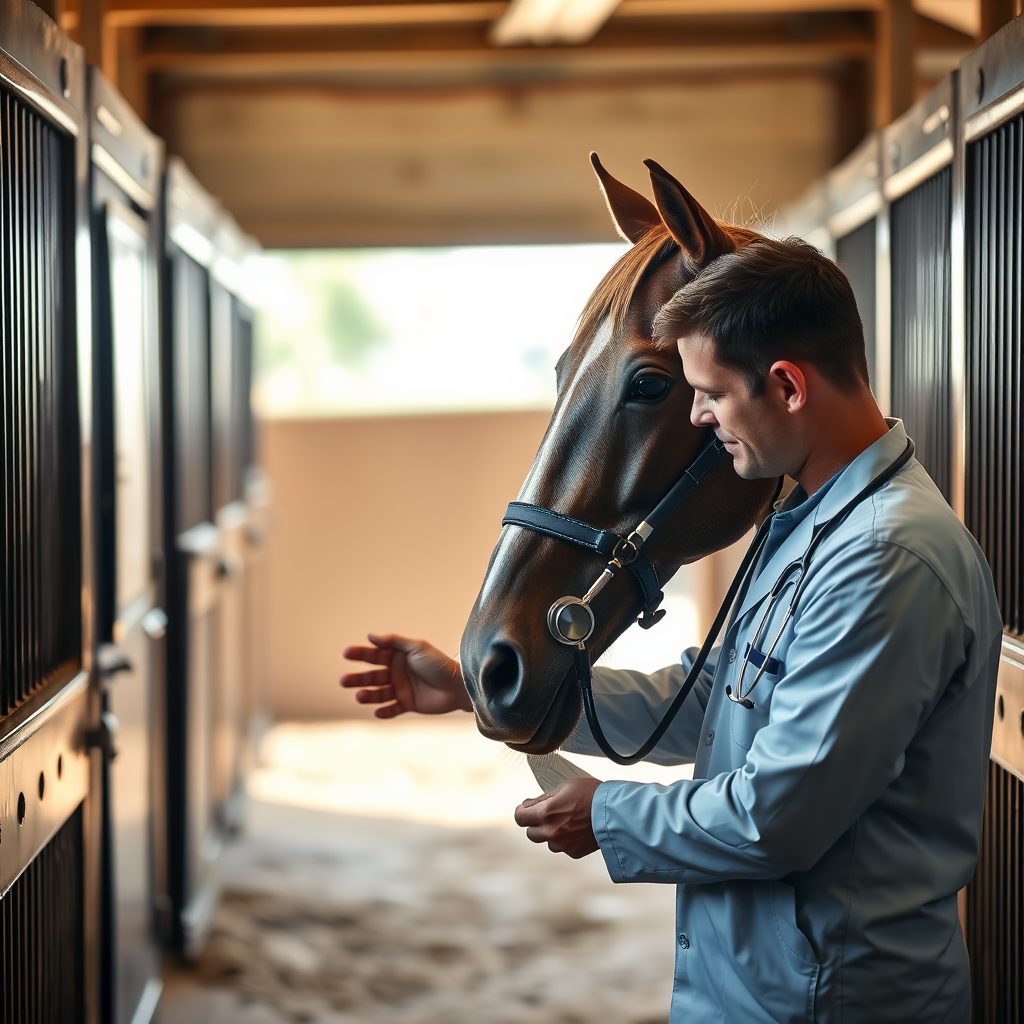
The horse is the single most valuable, most exposed asset in the entire operation, and equine insurance exists because that risk is real, specific, and — unlike almost any other business asset — alive. At its core is mortality insurance: you insure the horse for an agreed value, and if it dies from accident, illness, or disease, or must be humanely destroyed under covered veterinary circumstances, the policy pays that value.
Around mortality, owners typically add major medical and surgical coverage — colic surgery alone commonly runs well into five figures — and loss-of-use coverage, which pays out when a horse survives an injury but can never race or breed again. That last one matters more than people expect: a straight mortality policy doesn't respond at all if the horse lives but its racing career is over.
- Mortality — death from accident, illness, or disease
- Humane destruction under covered veterinary circumstances
- Major medical/surgical — veterinary treatment costs
- Loss of use — permanent inability to race or perform
- Theft and transit mortality
Mortality, major medical, and loss of use are three different answers to three different questions, and confusing them is the most common mistake we see. Mortality answers "what happens if the horse dies." Major medical answers "who pays the vet bill if the horse gets sick or hurt and survives." Loss of use answers "what happens if the horse survives but can never race or breed again." A horse that colics and survives surgery generates a major medical claim, not a mortality claim — the death benefit only triggers if the horse doesn't make it. A horse that shatters a leg and survives but can never return to competition generates a loss-of-use claim, not a mortality claim, because the animal is alive. Owners who assume one of these three automatically covers the others are the ones who discover the gap at the worst possible time — mid-claim, not before it.
Race Horse Owners Liability is a related but genuinely separate concept from mortality. Mortality protects your financial interest in the horse itself. Race Horse Owners Liability — a distinct product concept carried by a number of specialty carriers in this industry — addresses an owner's own liability exposure, particularly for owners who aren't in the barn day to day: syndicate members, passive investors, and partners who own a piece of a horse but leave the training and handling to someone else. That's a different kind of risk than "did my horse die" — it's "am I personally exposed if something goes wrong while my horse is racing or training, even though I wasn't the one holding the lead shank." If you own a horse through a partnership or syndicate structure, it's worth asking specifically how that liability exposure is addressed in your program, rather than assuming your mortality policy automatically extends to it.
Age is a real underwriting factor, and it's worth understanding going in. Across the equine mortality industry, it's standard for full mortality coverage to run through a stated maximum age, with pricing climbing as a horse moves through the older end of that bracket, and different terms available for horses beyond it. That's how mortality underwriting works generally, because the actuarial risk of death genuinely changes with age. If you're insuring a veteran campaigner rather than a young prospect, expect age to be one of the first questions in the conversation.
3. Spectator & event liability insurance — for the crowd
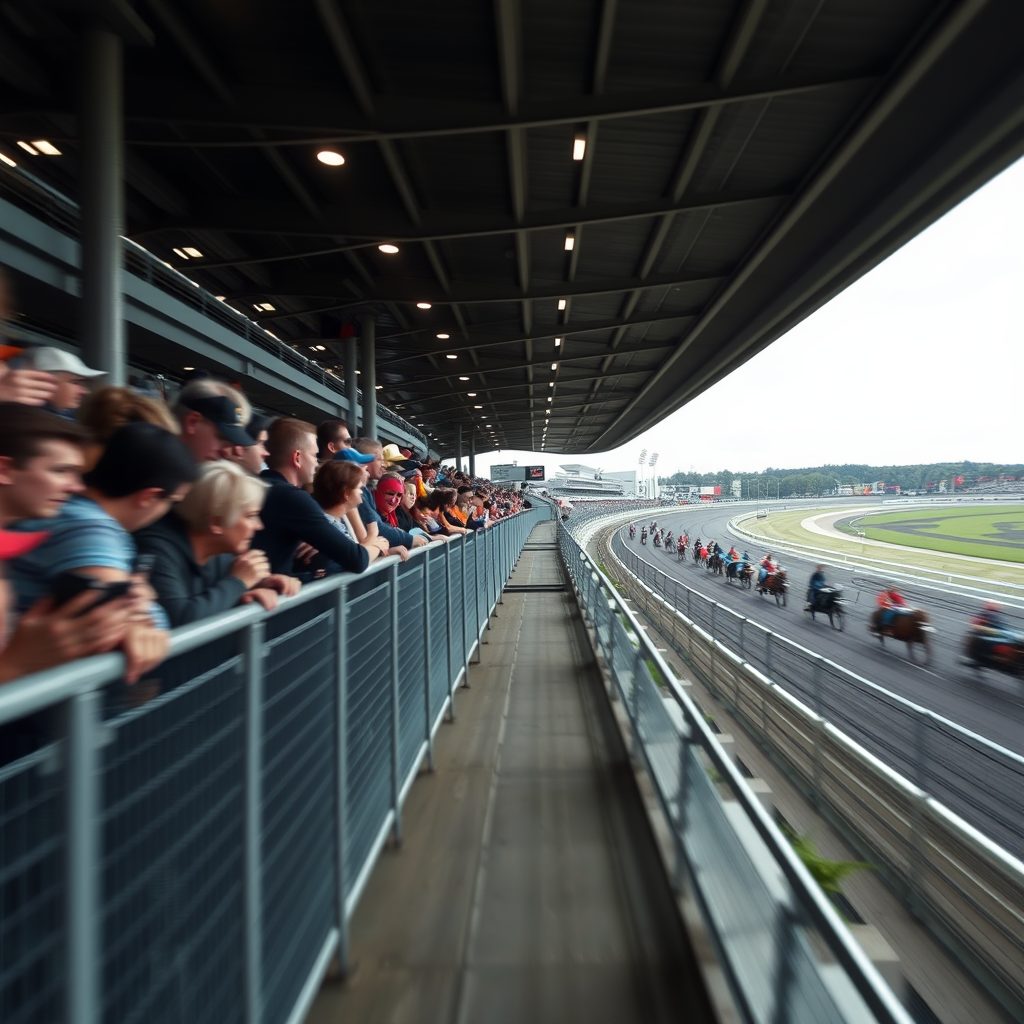
Race day multiplies a venue's exposure in a single afternoon. A track that might see a handful of staff on a normal training morning can host thousands of paying spectators, alcohol service, and wagering activity within a few hours — all concentrated around a live animal-racing surface. Spectator and event liability insurance is sized specifically for that spike, whether it's layered on top of standing facility coverage or written standalone for a one-off meet.
This is also where liquor liability lives. Most race days involve alcohol somewhere on the grounds, and liquor liability is frequently excluded or sub-limited on a standard policy — a claim arising from an intoxicated patron can fall straight into that gap if it isn't explicitly addressed.
- Bodily injury to spectators and attendees during a race event
- Grandstand, rail-area, and walking-ring incident liability
- Liquor liability where alcohol is served
- Vendor and concession-related liability
- Can be written per-event for one-off meets and fundraisers
One-day event liability policies are built for exactly the situation a lot of race organizers assume they don't have coverage for. If your race day is a single fairground meet, a charity fundraiser race, or a one-off community event rather than a standing annual operation, you don't need — and shouldn't have to buy — a full year-round liability program. A one-day event liability policy is written to cover exactly that: a single date, sized to your expected attendance and activities, issued fast enough to satisfy a fairground or municipality that requires proof of coverage before they'll approve the event. It's one of the most searched-for insurance questions tied to events in general, and it maps directly onto a huge share of the actual race days that happen at fairgrounds and community tracks around the country every year.
Does the law already protect us from spectator claims? This is a genuinely good question, and a fair number of venue operators believe the answer is yes because their state has an equine activity liability statute on the books. Most states do have some version of this law, and they matter — but they were written to limit liability for the inherent risks of participating in equine activities (being thrown from a horse, a horse behaving unpredictably around someone directly interacting with it), not to blanket-protect a venue from every claim a spectator might bring. A spectator injured by a crowd crush at a betting window, a fall on a wet grandstand ramp, or an incident tied to alcohol service is generally outside what these statutes were built to address, and the statutes typically don't apply at all if the injury traces back to ordinary negligence — poor maintenance, inadequate crowd control, an unsafe structure. Relying on an equine activity statute in place of actual spectator liability coverage is one of the more common and more expensive assumptions a venue operator can make.
4. Racer insurance — for jockeys, drivers, and participants
Nobody in the sport carries more physical risk than the person on the horse or in the sulky. Racer insurance protects the participants themselves — jockeys, drivers, exercise riders — typically combining accident and disability coverage for injuries sustained racing, training, or exercising, with participant liability for claims that can arise from an on-track incident involving another competitor.
This coverage matters especially because jockeys and drivers are frequently independent contractors, not employees of a single stable — which means standard workers' compensation, built around an employer-employee relationship, often doesn't reach them at all. Racer insurance is built to follow the participant across mounts and trainers instead.
- Accidental injury sustained while racing or training
- Temporary and permanent disability from a covered racing injury
- Accidental death benefit
- Participant liability from an on-track incident
- Coverage while exercising or schooling, not just race day
Care, Custody & Control matters here too, not just on the transportation side. Jockeys, exercise riders, and grooms routinely handle a horse they don't own — leading it to the paddock, exercising it in the morning, walking it to the test barn after a race. If something happens to that horse while it's in your hands, you can carry a real liability exposure distinct from your own accident and disability coverage, because the loss belongs to the horse's owner and you were the one holding the lead shank. A Care, Custody & Control endorsement addresses exactly that gap, and it's worth confirming it's built into your program if handling horses you don't own is a regular part of what you do.
Trainers and riding instructors sit right next to this line, even if they're not racing themselves. If your work involves teaching someone to ride, training a horse for an owner, or otherwise directing what a horse and rider do without being the one in the irons, your liability exposure looks more like a professional-services risk than a participant-accident risk. It's an adjacent exposure worth a direct conversation rather than assuming it's automatically folded into either racer coverage or a general facility policy.
5. Transportation & auto insurance — for getting there
Getting a horse to the track happens on public roads, at highway speed, towing a trailer carrying a live, thousand-pound animal — and a personal auto policy is frequently the wrong tool. Many personal policies exclude or sharply limit coverage once a vehicle is used commercially or is towing livestock for compensation, which is exactly the situation many owners, trainers, and haulers are in without realizing the gap exists until claim time.
Transportation and auto insurance covers the tow vehicle and trailer together, plus — critically — a care, custody, and control exposure for the horse itself while it's in transit. That last piece matters because a horse in a trailer is, for the duration of the trip, in the hauler's care, custody, and control — a distinct exposure from the vehicle liability alone.
- Liability for the tow vehicle on the road
- Physical damage to the tow vehicle and trailer
- Care, custody, and control coverage for horses in transit
- Coverage for commercial hauling operations moving horses for hire
- Scales from a single truck-and-trailer to a multi-state hauling fleet
"Horse trailer insurance" and what a racing operation actually needs are two different searches. Most of what comes up when someone searches for horse trailer insurance is built for a weekend hobbyist — a personal policy add-on for someone who tows their own horse to the occasional show. A racing operation hauling horses to the track on a real schedule, sometimes for compensation, sometimes with staff and equipment along for the ride, is a commercial exposure, and it needs to be underwritten as one from the start. The line between "personal" and "commercial" hauling is crossed faster than most owners think — it doesn't take a full transport fleet, just regular hauling for any form of compensation.
Roadside and breakdown-related exposure is part of a well-built transportation program too — a trailer with a blown tire or a truck that breaks down on the interstate with a horse still aboard isn't just an inconvenience, it's an active exposure until the situation is resolved, and it's worth confirming your policy actually addresses it rather than assuming a generic roadside plan covers a loaded horse trailer the same way it covers a sedan.
How the five lines fit together
Very few operations need only one of these. A track owner who also races horses needs facility plus equine. A commercial hauling operation moving horses for clients needs transportation coverage plus real thought about the care-custody-control exposure. A racing association may want to offer baseline racer coverage to its licensed jockeys while carrying its own facility and event program. The point isn't to buy everything — it's to map what you actually do against these five lines and close the real gaps, without paying twice for overlapping coverage.
That's the whole reason a specialist program exists rather than five separate agents each guessing at a piece of the picture: someone needs to see the whole race day at once.
What Does Horse Racing Insurance Actually Cost?
This is the question underneath almost every other question in this guide, and it's the one most coverage pages dodge with a vague "contact us for pricing." We'd rather answer it honestly: there's no single number, because a facility policy for a year-round thoroughbred track, a mortality policy on a single claiming horse, and a one-day event liability policy for a fairground meet are three completely different pricing conversations. But the drivers behind each number are real and knowable, and understanding them is what turns "how much does this cost" into an actual quote instead of a guess.
Facility insurance moves on your attendance and event calendar, the total insurable value of your grounds and structures, whether you serve alcohol, whether you run OTB, simulcast, or racino operations on-site, your regional weather exposure, and — more than any other single factor — your loss history. A track with a clean claims record and a well-documented property schedule will consistently price better than one with the same square footage and a spotty history.
Equine insurance is priced primarily off the horse's agreed value, so a $15,000 claiming horse and a seven-figure stakes winner are never going to land anywhere near the same premium — that's by design, since the payout obligation scales with the value you're insuring. Beyond agreed value, age, racing record, discipline, which coverages you select (mortality alone versus mortality plus major medical plus loss of use), and the horse's veterinary history all move the number.
Spectator and event liability tracks your expected attendance, whether alcohol will be served, wagering activity on-site, and your venue layout — a wide-open fairground midway and a tight grandstand-and-rail configuration carry different real exposure even at the same headcount. A one-day event policy for a single race card will price very differently than a standing annual program covering a full racing calendar, which is exactly why it's worth being specific about which one you actually need before asking for a number.
Racer insurance is driven by discipline, mount volume, the accident and disability limits you select, and prior injury history. A jockey riding a full book of mounts across a busy meet carries more exposure than an exercise rider working mornings only, and the coverage limit you choose — not just whether you have coverage at all — is one of the biggest levers on the premium.
Transportation insurance moves on the value of your vehicle and trailer, how often you haul, your driving radius, and whether you're hauling only your own horses or for hire. A single owner making occasional regional trips and a commercial operator running a multi-state circuit are not the same underwriting conversation, even if they're both technically "horse trailer insurance."
None of these ranges substitute for a real quote — the fastest way to an actual number is a quick conversation. Call 844-967-5247 and tell us which side of race day you're insuring, and we'll walk through the real factors that apply to your specific situation rather than quoting off a national average that doesn't reflect what you actually do.
The mistakes that cost racing connections the most
- Assuming personal auto covers hauling — it frequently doesn't once compensation or commercial use is involved.
- Letting a horse's agreed value go stale after a big win or a claim.
- Skipping loss-of-use coverage on a horse whose value depends entirely on racing or breeding.
- Treating spectator liability as covered by a generic facility policy without checking the actual limits against real race-day attendance.
- Assuming a stable's workers' comp reaches an independent-contractor jockey — it usually doesn't.
- Assuming a state's equine activity statute protects a venue from spectator claims the way it protects a trainer from participant claims — it generally doesn't.
- Treating a one-time race day like it needs the same annual policy as a standing track, instead of a one-day event policy sized to that single date.
None of these are exotic mistakes — they're the ordinary result of trying to fit five distinct exposures into whatever generic policy happened to be easiest to buy. A specialist program built around the actual five buyers of race day closes them from the start.
How claims actually play out across each line
It helps to picture how each of these five lines actually responds when something goes wrong, because the differences aren't academic. On the facility side, a grandstand fire or hail event triggers a property claim adjusted against the schedule of insured structures — which is exactly why underinsuring the backstretch barns or tote equipment matters: a coinsurance penalty on a partial schedule can shave a real percentage off what should have been a full payout.
On the equine side, a mortality claim requires a veterinary determination and documentation tying the cause of death or humane destruction to a covered circumstance — which is why keeping a horse's health records current and using a vet familiar with insurance requirements matters more than owners often expect. A loss-of-use claim is slower and more document-heavy still, because it requires establishing that the inability to perform is genuinely permanent, not a temporary setback.
Spectator and event liability claims are usually the fastest-moving of the five, because they involve an immediate incident report, often emergency medical response, and a claim that needs prompt investigation while witnesses and video are still available — which is one more reason a track's incident-reporting discipline on race day matters as much as the policy itself.
Racer disability claims hinge on medical documentation of the injury and, for anything beyond short-term disability, an assessment of whether the participant can return to competitive riding or driving at all — a determination that can take months to finalize for a serious fall.
Transportation claims split into two tracks that move independently: the vehicle and trailer physical-damage claim proceeds like any commercial auto claim, while a horse injured in the same incident generates a separate care-custody-control or mortality claim that needs its own documentation. Haulers who understand this ahead of time — and know which policy to call first — get through a bad day considerably faster than those discovering the split for the first time during a roadside emergency.
Building a program instead of buying a policy
The single biggest shift in thinking that helps racing connections get this right is treating insurance as a program to be built, not a policy to be bought.
A program starts with an honest inventory of what you actually do — do you own the ground, the horse, the event, the ride, or the truck, or some combination — and then maps real coverage against each piece, checking for both gaps and expensive overlap.
That's a fundamentally different starting point than calling around for "horse racing insurance" and hoping whatever comes back happens to fit. It's also why this guide exists: so that before you talk to anyone, you already know which of the five lines actually applies to you, and can ask for exactly that instead of a generic quote that may not fit any of it precisely.
A practical checklist before you call anyone
Before you pick up the phone, it's worth writing down a short, honest answer to five questions — because the clearer you are on these, the faster and more accurate any quote you get back will be, from us or from anyone else.
- Do you own, lease, or operate any physical racing venue or training center — including any attached OTB, simulcast, or racino operation?
- Do you own, co-own, or train any horse currently in racing condition, and what is it roughly worth today?
- Are you organizing, hosting, or sponsoring any event where spectators will be present near live racing — and is it a standing operation or a single race day?
- Are you, or is anyone in your operation, licensed to ride or drive in competition, or does your work involve handling horses you don't own?
- Do you regularly transport horses on public roads, for yourself or for anyone else, in any capacity — occasional or commercial?
A "yes" to any of these points to one of the five coverage lines in this guide. A "yes" to several points to a real program, not a single policy — and that's exactly the kind of conversation a specialist agency is built to have.
Seasonal and regional considerations
Racing calendars vary enormously by discipline and region — a fairground quarter horse meet running a handful of dates in late summer looks nothing like a year-round thoroughbred track, and a harness track's evening racing schedule creates a different crowd and lighting profile than a daytime flat-racing card. None of these differences change which of the five coverage lines applies, but they do change how each line should be sized. A facility that only opens its gates a few weekends a year shouldn't be paying for a standing annual liability program built for daily operations, just as a track running year-round shouldn't be relying on event-by-event coverage meant for occasional meets.
Weather matters too, in ways specific to each line. A track in a hail- or hurricane-exposed region needs its facility property coverage structured around that reality, with deductibles that reflect real regional risk rather than a national average. A hauler running routes through mountain passes or extreme summer heat carries a different transportation risk profile than one driving flat interstate the whole way. None of this is exotic underwriting — it's simply matching each of the five coverage lines to where and how your specific operation actually runs, rather than pricing it off a generic national assumption.
Why we built the program this way
We didn't invent the idea that racing has five distinct buyers — the industry has always worked this way, with tracks, owners, organizers, jockeys, and haulers operating as genuinely separate businesses that happen to converge on the same afternoon. What's changed is treating that structure as the starting point for how coverage gets sold, rather than forcing everyone through a single generic "racing policy" and hoping it stretches to fit. Once you see race day as five coverage lines instead of one, the gaps that used to hide between mismatched policies become obvious — and closeable.
If you've read this far, you already know more about how racing insurance is actually structured, and what it actually costs, than most people who've been buying it wrong for years. The next step is simple: figure out which of the five lines is yours, and start there — a program is built one honest conversation at a time, not sold in a single generic quote. Call 844-967-5247, or start with the coverage line that matches what you actually do.
Frequently asked questions
Almost never all five at once, unless you run a full operation spanning venue, horses, events, and hauling. Most people need one or two lines that match what they actually do — we help you map that out.
Whichever exposure is live right now. If you own a horse, equine mortality is usually first. If you're organizing an event, spectator & event liability is time-sensitive. If you're regularly hauling, transportation coverage closes the biggest personal-auto gap.
That's the point of a specialist program — rather than five different generalist agents each guessing at one slice, we coordinate all five so nothing overlaps and nothing gets missed.
There's no single number — a facility policy, an equine mortality policy, and a one-day event liability policy all price against completely different factors like attendance, agreed value, and loss history. Call 844-967-5247 and we'll walk through the real cost drivers for your specific situation.
Ready for a real quote?
Tell us which side of race day you're insuring and we'll build a program that fits — often same day.